Origin & quality
Verified traceability, from field to laboratory
Every batch we deliver — ylang-ylang essential oil as well as coconut oil — is identified from harvest, sampled, and analysed against the applicable standard before shipping.
The harvest criterion — ylang-ylang
The centre of the flower
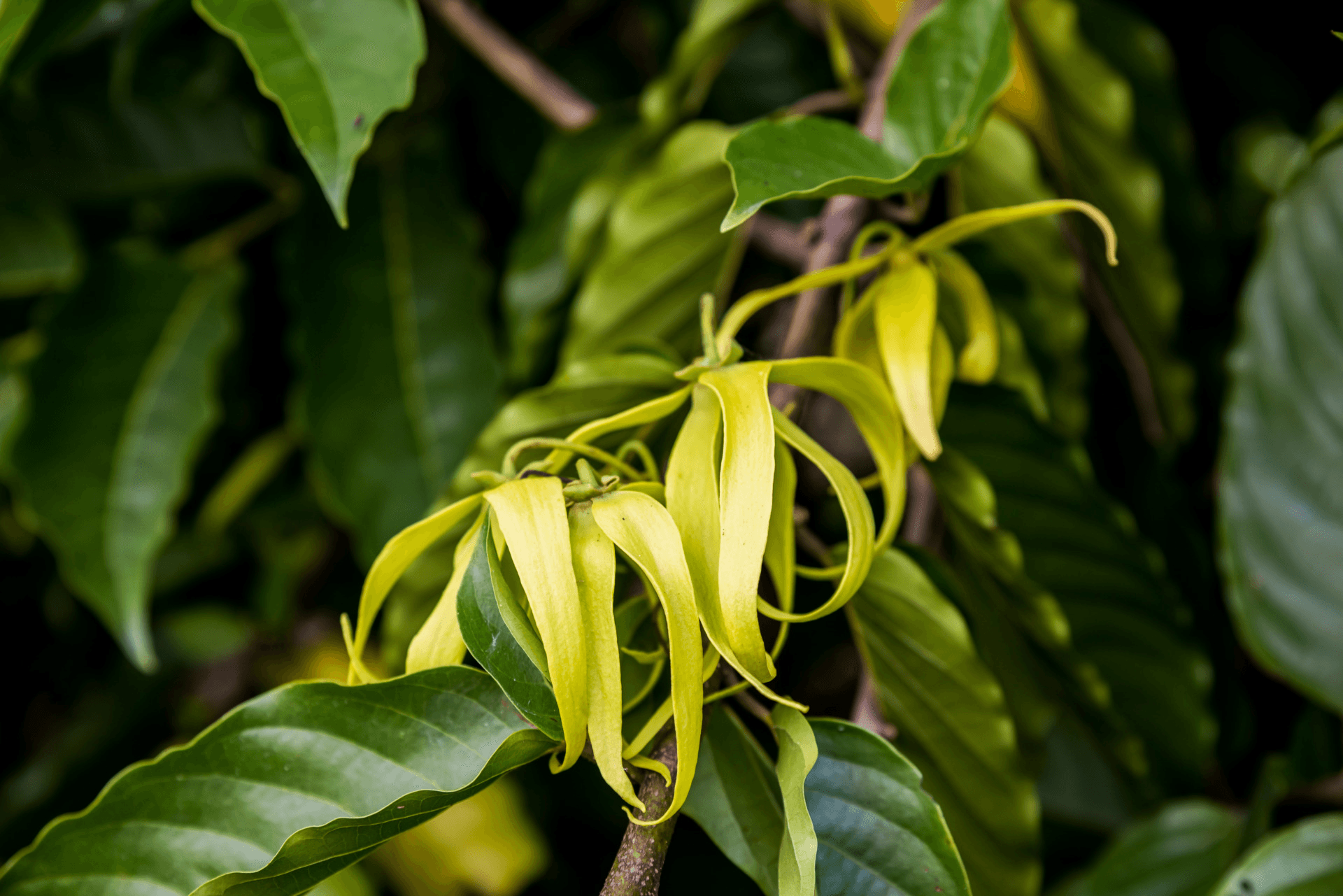
An ylang-ylang flower is only picked once its centre turns red — a sign of full maturity. A flower picked too early, with a centre still green or yellow, yields a lower quality oil with a weaker scent. This criterion is checked flower by flower, by hand, by our partner producers in Nosy Be.
The process — coconut oil
Cold-pressed, in a solar-powered laboratory
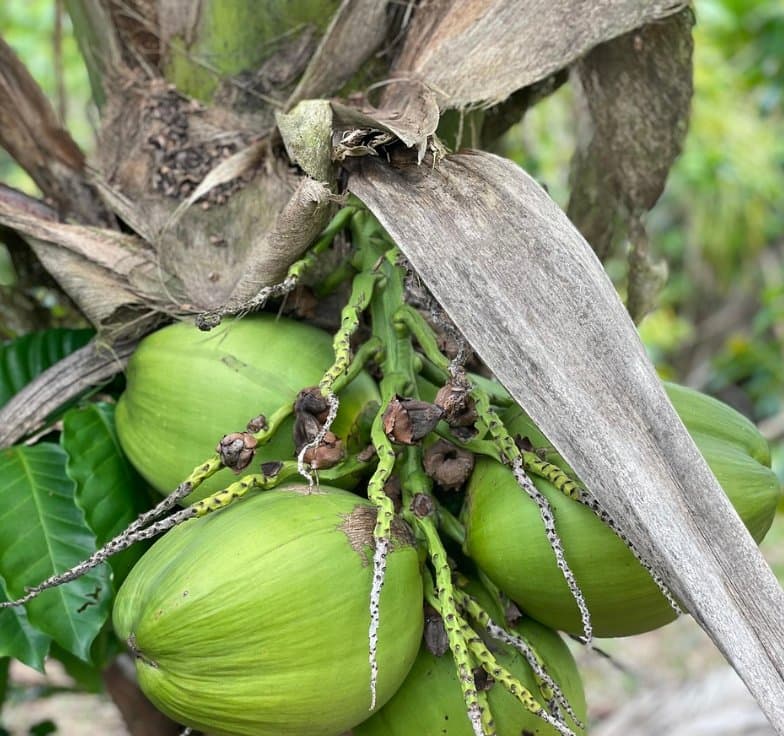
Our coconut oil is extra virgin and cold-pressed: the flesh is ground, dried in an electric dehydrator, then pressed with an electric press — no fire, no refining or chemical treatment. All production takes place in Nosy Be, in a container laboratory powered entirely by solar energy, out of respect for the environment.
See the full process, step by stepQuality control
What we check
Full laboratory analysis
Gas chromatography, peroxide value, density, refractometry, optical rotation — compliance checked against the standard applicable to each product (ISO 3063 for ylang-ylang, CODEX STAN 210 for coconut oil).
Safety data sheet
Established per product and per supplier, provided to every client on request.
Cosmetic allergen sheet
Quantification of the ten regulatory allergens naturally present in ylang-ylang oil, for compliant cosmetic use.
Not classified as dangerous for transport — the flash point of ylang-ylang oil sits between 87 and 110°C, well above the 60°C threshold that triggers IMDG classification for flammable liquids. No dangerous goods constraint applies to its sea transport.